Look Up: The Fifth Wall and Why the Ceiling Changes Everything
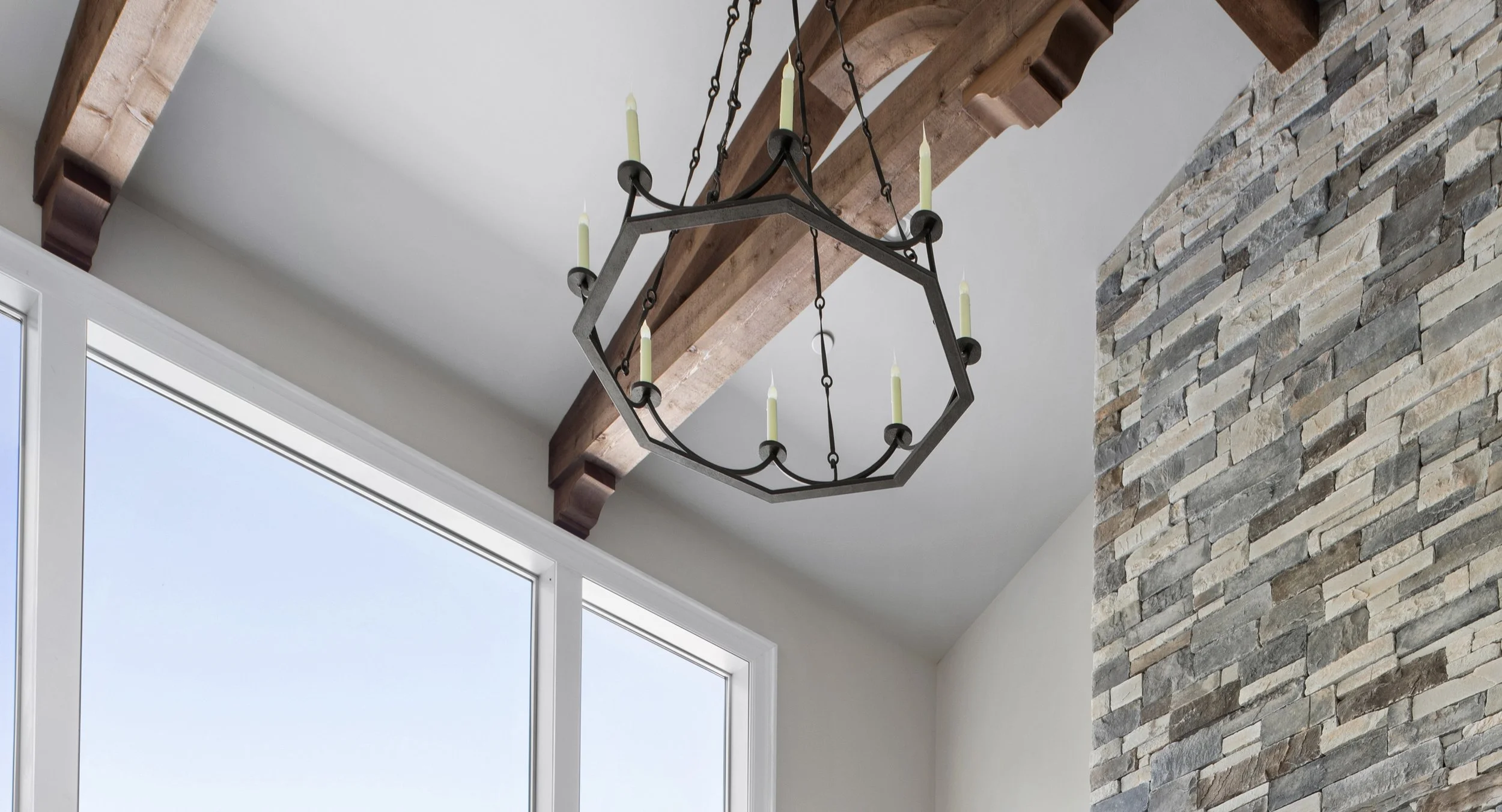
As an interior designer working throughout Oregon and the Pacific Northwest, there is one habit I can't break when I walk into a room. Before I look at the furniture, the floors, or the art, I look up, at the architecture of the room.
Most people don't. And that is exactly why the ceiling, the fifth wall, is the most overlooked surface in almost every home. Yet when you're looking at a beautiful room online or in a magazine, it's often the very thing that draws you in.
The Largest Surface No One Designs
In most rooms, the ceiling is the single largest uninterrupted surface. It has no furniture in front of it and no art competing with it. Yet in the majority of homes, it is painted flat white by default, not by decision.
A white ceiling is sometimes the right answer. But it should be an answer, not an assumption. When a ceiling is designed with the same care as the walls and floors, a room feels finished in a way that is hard to name and impossible to miss.
This matters more as the season turns. In October/November, the evenings arrive early here, and we spend more of our hours indoors under lamplight. The rooms we live in start to feel closer, and the ceiling, lit from below, becomes part of what we see every night.
"Before I look at the furniture, the floors, or the art, I look up. Most people don't, and that is exactly why the ceiling is the most overlooked surface in a home."
Color and Finish: Beyond Flat White
The simplest way to bring the fifth wall into the design is color.
A soft tone overhead. A ceiling a shade or two warmer than white, or a pale version of the wall color, makes a room feel enveloping rather than boxed in.
Color drenching. Walls, trim, and ceiling in one color creates a cocooning effect. It works beautifully in dens, libraries, and bedrooms, where the goal is calm.
Sheen as a tool. A high-gloss or lacquered ceiling reflects light back into the room and adds depth. It asks for a skilled painter and well-prepared surfaces, but the result is luminous.
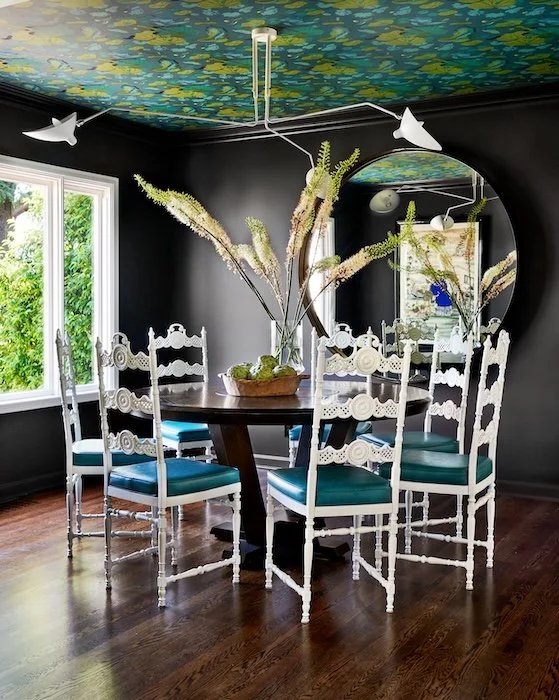
Photo by Lord Design and Blackstone Edge Studios
If you read our recent post on color and warmth, you'll recognize the thread. A color you love doesn't have to stop where the wall ends.
Materials That Belong to This Place
In the Pacific Northwest, wood overhead is one of the most natural ways to connect a home to its landscape. Tongue-and-groove ceilings and exposed beams bring warmth into a room during our long gray months, and they age with a character that paint never will.
Plaster is another option I love. A hand-troweled ceiling catches light differently from hour to hour and gives even a simple room a sense of craft.
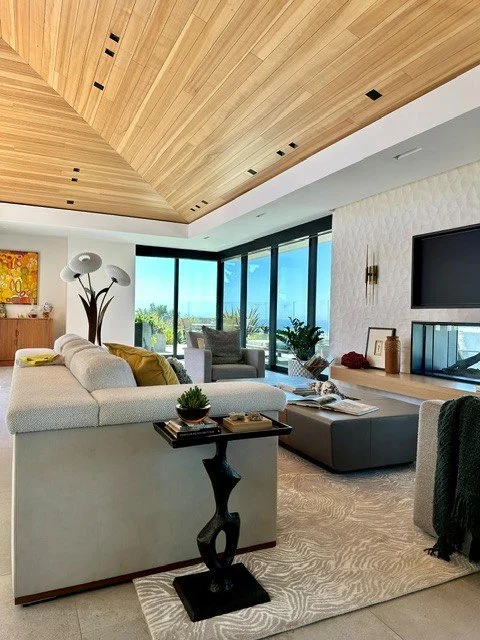
Photo by Benedict August
Pattern Overhead: The Jewel-Box Moment
Wallpaper on a ceiling is one of the most rewarding risks in design, especially in smaller rooms. A powder room with a papered ceiling becomes a jewel box. A dining room with pattern overhead feels intimate and celebratory, which is exactly what we want as the holiday gatherings approach. In a bedroom, a quiet pattern above the bed is the last thing you see at night.
The key is scale. In a small room, a larger pattern often reads as more intentional and dramatic. A smaller-scale pattern creates a quieter room that still has character.
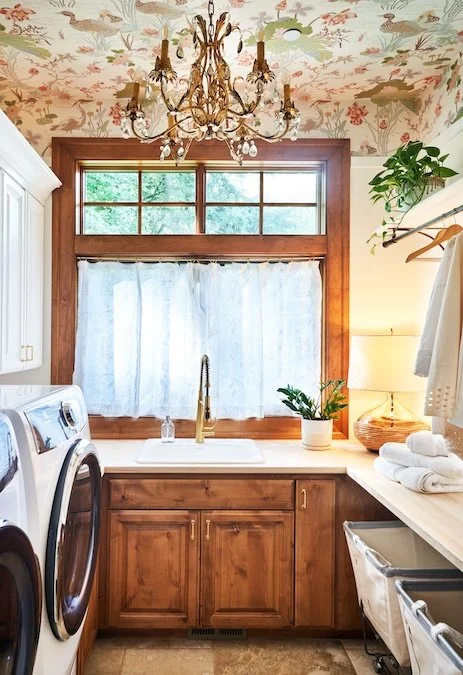
Design by Lord Design. Photo by Blackstone Edge Studios
A Word on Light
Whatever you choose overhead, light decides how it reads after dark. A fixture, a wash of light, or the placement of recessed cans can make even a modest ceiling the most memorable part of a room, so it's worth planning the two together. Our posts Beyond the Switch and Lighting 101 go deeper on layered light.
Where to Start
If you want to bring the fifth wall into your own home, start with one room. Choose the room where you spend your evenings, or the one where you gather people. Then ask a few questions:
What do I actually see when I sit in this room at night?
Does the ceiling feel like part of the room, or like something left over?
Would this room feel better closer and warmer, or taller and brighter?
The answers will point you toward color, material, pattern, or light. In new construction and major renovations, these decisions are best made early, while ceiling heights, beams, and lighting locations can still be shaped. At J. Myers + Associates, the ceiling is part of the design conversation from the very first walkthrough.
If a room in your home has been asking for something and you can't quite name it, try looking up. Let's connect, and we can talk about what your fifth wall could become.
Also worth reading: Beyond the Trend: Color, Warmth, and What You Actually Love
Jennifer Myers is the founder and principal designer of J. Myers + Associates, based in Lake Oswego, Oregon — specializing in custom home design, renovation, and full service interior design throughout the Pacific Northwest. If you're beginning to think about a new home, a renovation, or a furnishings refresh before the holidays, we'd love to start the conversation.