Fast, Cheap, or Good: Why You Can’t Have All Three
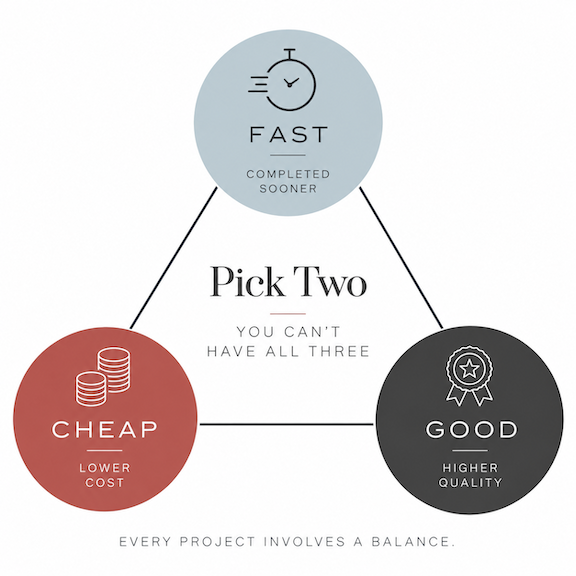
There is one framework I return to in almost every early client conversation — because naming it clearly at the start shapes every decision that follows. From custom construction and renovation to furnishings, décor, and accessories, this is the conversation we have with every client. It sounds simple. But it defines everything.
Fast, cheap, or good. Pick two.
You have probably heard this applied to any service business. It holds everywhere. But in interior design, the corners of that triangle behave differently than most clients expect — and there is one relationship I want to be especially direct about, because I have seen the assumption cause real confusion.
"Fast is not the same as cheap in this work. It is almost never cheaper. It is often the most expensive direction of all."
What "Fast" Really Means in Design
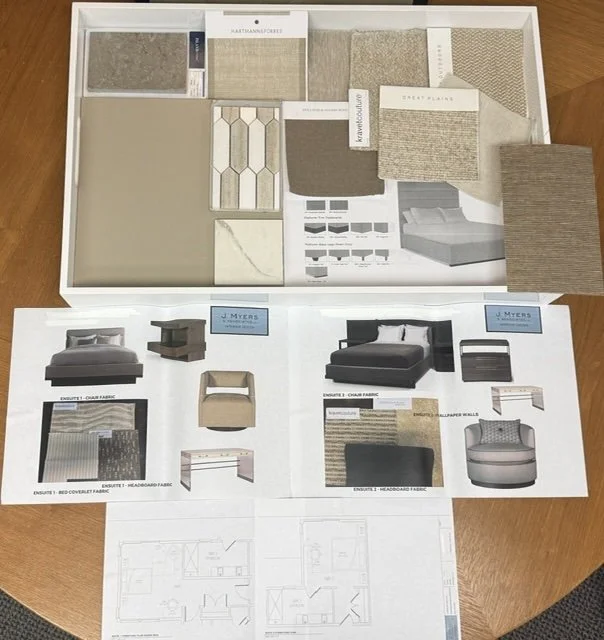
When a client asks how quickly we can pull a project together, the first thing I think about is sourcing. Because the considered, curated look that defines the work I care most about is not sitting in a warehouse waiting to ship.
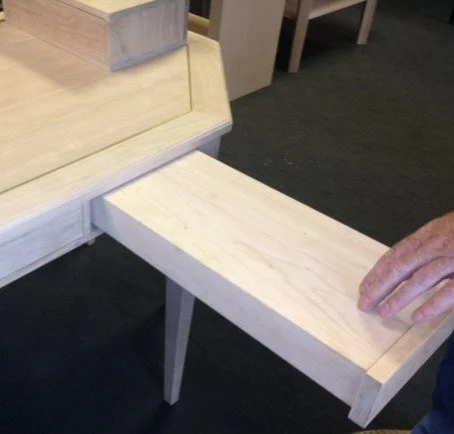
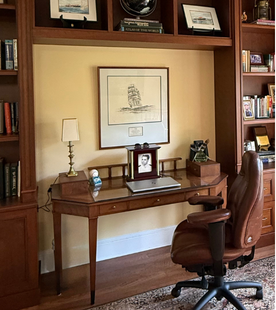
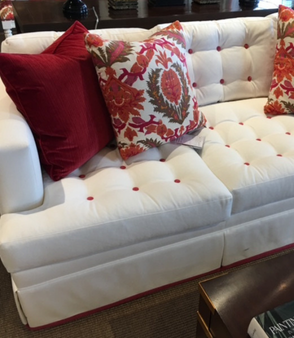
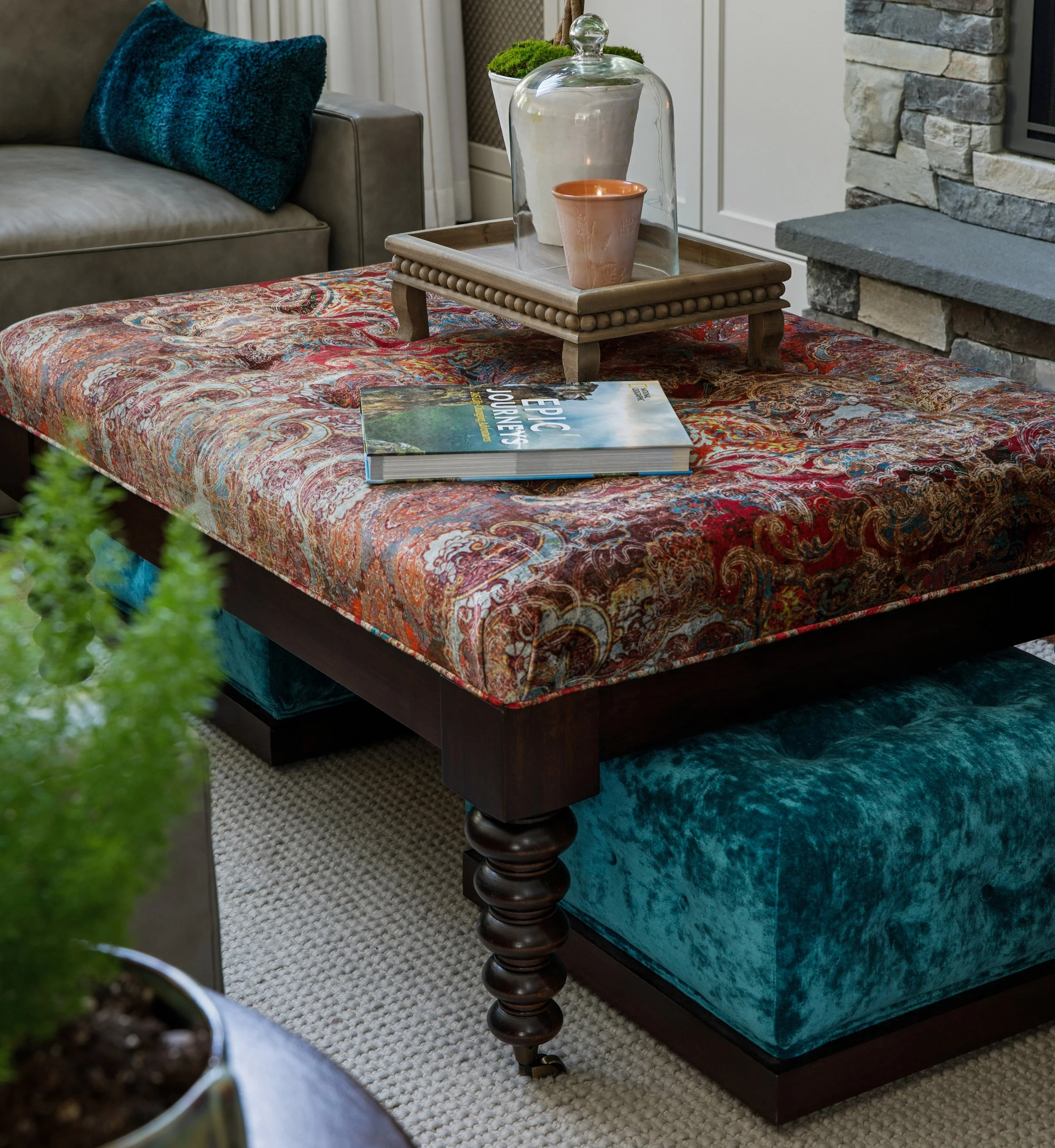
Design at this level involves vendors who make things to order. Fabrics that are specified for a particular room, upholstery built to a scale and specification, hardware selected for how it will read alongside a wall color and a stone surface over time. These are not things you find on a showroom floor in a standard finish at a standard lead time.
When speed becomes the priority, the available choices narrow immediately. What is accessible fast is what is in stock locally, or what ships from a warehouse in whatever colorways and sizes exist today. That is a perfectly reasonable starting point for some projects. But it is not a curated result. It is an available one.
And when I need to move quickly — expanding the search, working beyond my immediate network to find something that fits the window — that time is real, and it is expensive. A designer's hours spent chasing limited inventory are not fewer than the hours spent designing thoughtfully. They are often more. Speed compresses the options and multiplies the effort.
There is also the question of where design is going. Tastes and directions shift continuously — that is the nature of this work. When you are limited to what is immediately available, you are often choosing from the last cycle's inventory. Timeliness and trend exist in real tension with fast sourcing, and the result can feel slightly behind before it is even installed.
And That Is Before We Get to Construction
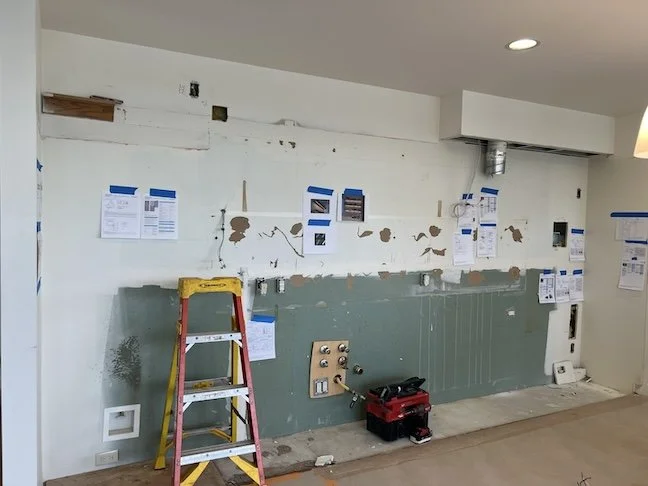
Everything above is about furnishings, accessories, finishes — the movable layer of a project. Add construction and the stakes of a compressed timeline multiply considerably.
When a project is moving fast, I am not designing. I am reacting. Reacting to what the construction schedule requires, to the decision that needs to be made by end of week, to the tile that is in the size the contractor needs, to the fixture that is available locally and will not delay the rough-in. The choices narrow to what fits the window — not what is right for the space.
The best design decisions need time to settle. To sit with an option and come back to it. To see how one choice opens or forecloses something else entirely. To understand how the room will actually live in — not as a floor plan on paper but as a space people move through, eat in, rest in, gather in. That process does not happen under pressure.
When we rush it, we are making decisions — not design decisions. And the difference shows in the work.
There Are Many Layers of Pricing — and Longevity Matters
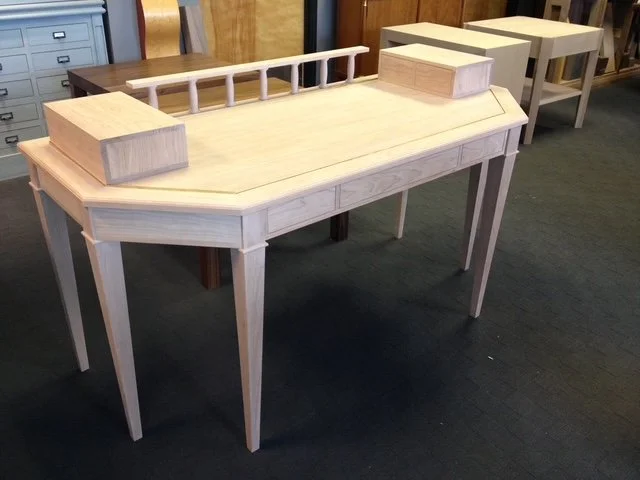
In today's market, the range of what things cost is extraordinary. What looks similar in a photograph can represent a tenfold difference in construction quality, material integrity, and how well something holds up over years of actual use.
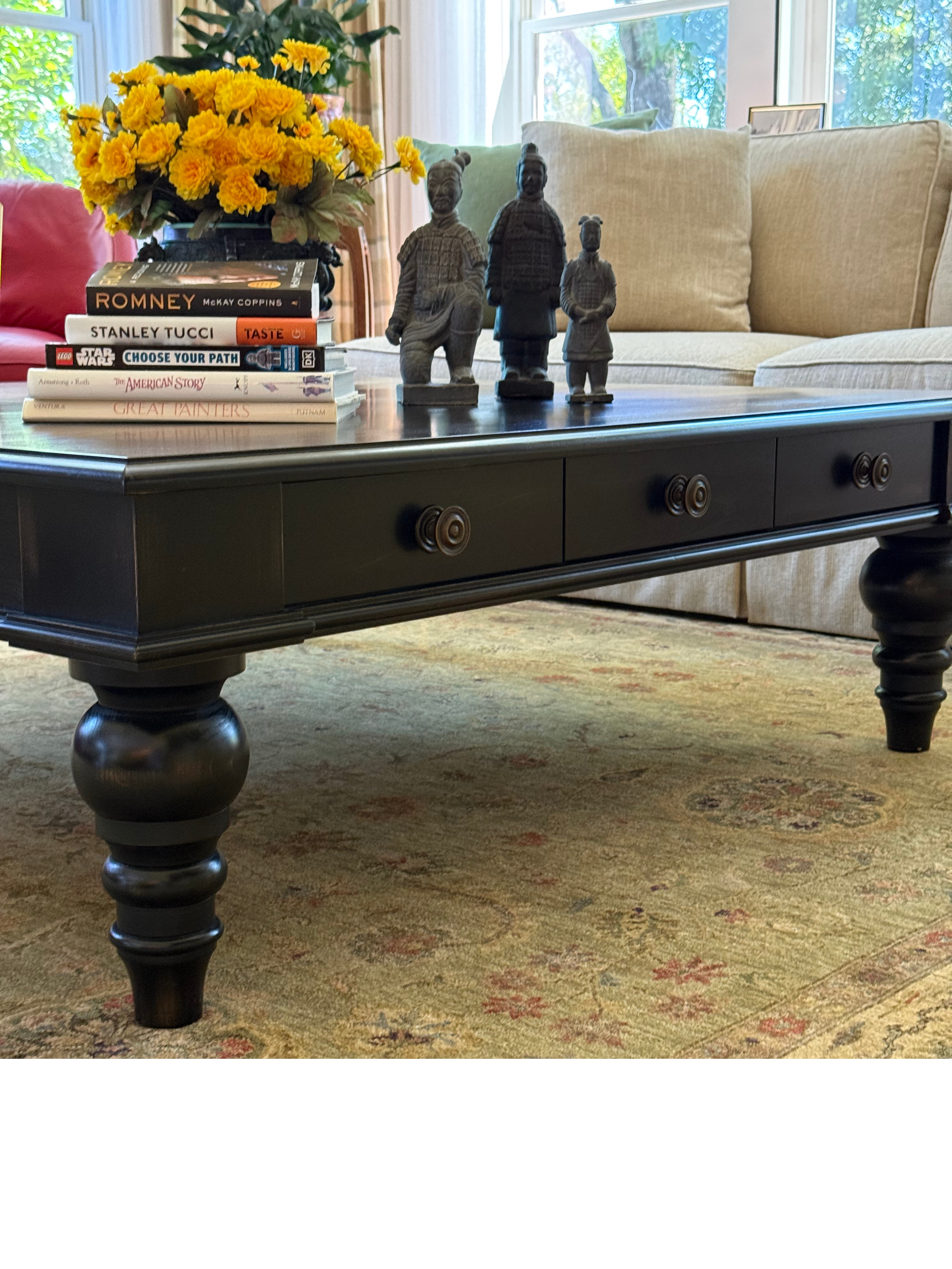
The real question is never simply what something costs today. It is what it costs you over the years you plan to be in this home. A piece built to last, in a fabric chosen for both beauty and durability, is a different investment than one that photographs the same and begins to show its limits within two seasons.
Understanding what longevity means to you — and how long you intend to stay — is part of how we help you decide where to invest and where flexibility is genuinely possible. The triangle is always present. But which corners matter most to you shapes every choice that follows.
How We Work Through This With You
One of the first conversations we have with every new client is about the triangle — not as a limitation, but as a map. Understanding where your project sits helps us understand what is possible, where to invest time and patience, and where flexibility genuinely serves you.
Part of our role is helping you see when something is worth waiting for. There are selections — a particular fabric, a stone, a piece made to order from a vendor we trust deeply — that bring something to a space that nothing immediately available could replicate. The quality of the material. The way it will age alongside everything else in the room. The specificity of it to this house, this light, your life in it. When we find that, we will tell you. And we will tell you why — not simply that it is better, but what it brings to the project, and what the space would lose without it.
Patience in design is not delay for its own sake. It is the difference between assembling a room and designing one. The projects we are proudest of are almost always the ones where the client was willing to hold space for the right thing — who understood that the most considered result is built one good decision at a time, not from whatever was available at the moment of decision.
That is the conversation we want to have with you early — before the schedule is set and the window has closed. Because the potential of a project is often found exactly there: in the selections that required a little more time, and were completely worth it.
We are always glad to start that conversation early.
Also worth reading: Seeing Everything: What Happens When a Designer Travels
Jennifer Myers is the founder and principal designer of J. Myers + Associates, based in Lake Oswego, Oregon. If you're beginning to think about a new home, a renovation, or a furnishings refresh before the holidays, we'd love to start the conversation.